ICSE Science rewards students who understand concepts deeply and communicate them precisely.
Many students begin preparing for ICSE Science by memorising chapters. Very quickly they discover that examinations reward something far more demanding.
Students are expected to explain scientific principles clearly, apply knowledge in unfamiliar situations, interpret diagrams, solve numerical problems, justify reasoning and communicate with precision across Biology, Chemistry and Physics.
Visionaries prepares students through structured academic mentorship that develops conceptual understanding, scientific communication and long-term confidence rather than short-term memorisation.
Curriculum
ICSE
Grades
6 – 10
Subjects
Biology · Chemistry · Physics
Delivery
Live Online
Formats
One-to-One · Small Groups
Focus
Conceptual Science Learning
A curriculum that rewards depth, precision and clarity of expression.
ICSE Science does not measure how much a student has read. It measures how well a student can explain, reason, interpret and communicate what they have understood.
- 01
A wider syllabus
ICSE Science covers a broader range of topics per grade than most Indian boards, requiring sustained pace and structure.
- 02
Descriptive answers
Marks are awarded for explanation, sequencing and reasoning — not one-line responses.
- 03
Practical understanding
Students must reason from experiments, observations and inferences, not only theory.
- 04
Detailed diagrams
Neat, labelled, proportionate diagrams become part of the answer itself.
- 05
Terminology precision
Correct scientific vocabulary is expected in every response.
- 06
Application questions
Papers routinely test whether students can apply principles to unfamiliar contexts.
- 07
Strong conceptual depth
Chapters interlink; the same principle reappears across topics and years.
ICSE expects students to explain Science, not simply recognise it.
Three subjects. One standard of scientific thinking.
ICSE Science is not a single subject — it is a discipline delivered through three languages. Visionaries teaches each of them with equal academic seriousness.
- Subject 01
Biology
The Science of living systems.
ICSE Biology asks students to describe life processes with precision, interpret biological diagrams, use accurate scientific terminology and translate observation into structured explanation.
- Life processes
- Diagrams
- Scientific terminology
- Observation
- Explanation
- Subject 02
Chemistry
Reasoning through matter and change.
ICSE Chemistry expects students to write balanced equations, reason through reactions, understand practical chemistry and perform disciplined calculations grounded in first principles.
- Reactions
- Equations
- Reasoning
- Practical chemistry
- Calculations
- Subject 03
Physics
The discipline of concept and calculation.
ICSE Physics rewards clarity of concept, structured numerical work, careful derivations and the ability to apply principles to real, unfamiliar situations through logical reasoning.
- Concepts
- Numericals
- Derivations
- Applications
- Logical reasoning
Why chapter memorisation eventually fails.
Memorised knowledge is fragile. As the syllabus grows and questions become more application-driven, only students who understand the underlying principles continue to perform consistently.
Interconnected concepts
Every topic in ICSE Science connects to another. Memorising in isolation quickly collapses.
Recurring principles
Core principles reappear across chapters, subjects and grades in progressively harder forms.
Scientific reasoning
Students are expected to justify — not simply state — the answers they give.
Application over recall
Papers deliberately place familiar ideas in unfamiliar contexts to test genuine understanding.
Understanding lasts longer than memorisation.
The examination is a test of communication, not only knowledge.
In ICSE Science, marks are earned by how clearly a student expresses understanding. Two students can hold the same knowledge and receive very different marks based purely on how they communicate it.
- 01
Definitions
- 02
Explanations
- 03
Comparisons
- 04
Distinctions
- 05
Scientific terminology
- 06
Logical sequencing
- 07
Labelled diagrams
- 08
Concise precision
- Step
1State the principle in precise scientific language. - Step
2Introduce the relevant terminology with clarity. - Step
3Explain the mechanism or process in logical sequence. - Step
4Support with a labelled diagram or equation where required. - Step
5Apply the principle to the context of the question. - Step
6Conclude with a precise statement — not a summary.
Presentation is not cosmetic. It is communication.
Answer writing is a trained skill. Students who write well in ICSE Science do not simply know more — they have been taught how to think in structured, examiner-readable form.
- 01
Keywords
The correct scientific keyword often carries the mark. Approximations do not.
- 02
Command words
Define, describe, explain, compare and justify each demand different structures of answer.
- 03
Mark allocation
Every mark corresponds to a specific point — students are trained to recognise them.
- 04
Structure
Answers are built as sequenced statements, not paragraphs.
- 05
Presentation
Legibility, spacing and layout influence how examiners read the answer.
- 06
Clarity
Ambiguity is treated as absence. Precision is treated as understanding.
- 07
Diagrams
Diagrams are used as part of the answer, not as decoration.
- 08
Terminology
Every technical term must be used correctly and in context.
- 09
Common mistakes
Predictable errors are identified early and corrected through repeated practice.
Numerical work is a discipline of reasoning, not arithmetic.
In Physics and much of Chemistry, marks are lost not because students cannot calculate, but because they cannot reason. Visionaries teaches a disciplined sequence for every numerical.
- Units
Every quantity is verified in the correct system before use.
- Formula Selection
The correct principle is identified before any calculation begins.
- Substitutions
Values are substituted with units, not as bare numbers.
- Calculations
Arithmetic is disciplined, staged and legible.
- Interpretation
The final number is read back into the original scientific question.
Practical work is an extension of thinking, not a separate subject.
Practical Science is not an interruption of theory — it is where theory is tested. Visionaries prepares students to reason from experiments with the same precision they bring to written answers.
Laboratory observations
Trained sensitivity to what is actually happening in an experiment.
Experiments
Understood as investigations, not procedures to be reproduced.
Inference
The ability to move from observation to scientific conclusion.
Practical records
Structured, precise and consistent — the way examiners expect them.
Safety
Understood as a scientific principle, not a checklist.
Viva preparation
Confident, precise, oral communication of practical reasoning.
A well-made diagram is often the clearest answer on the page.
In ICSE Science, diagrams carry marks in their own right. A precise, labelled diagram frequently communicates understanding faster and more accurately than a written paragraph.
- 01
Neatness
Every line and label placed with intent.
- 02
Labels
Precise, correctly spelled and correctly located.
- 03
Proportions
Biological and physical structures drawn to reasonable scale.
- 04
Terminology
Correct scientific vocabulary integrated into the diagram.
- 05
Annotation
Where required, explanatory notes support the drawing.
Scientific diagrams communicate understanding before words do.
A framework built for lasting scientific understanding.
Every stage exists for a reason. Together they form the rhythm through which every ICSE Science student at Visionaries progresses over the year.
- 1Stage 01
Understand
Every concept begins with the underlying principle — not the answer.
- 2Stage 02
Discuss
Ideas are examined through structured, precise scientific conversation.
- 3Stage 03
Visualise
Diagrams, models and analogies make abstract concepts concrete.
- 4Stage 04
Apply
The concept is tested against unfamiliar problems and real situations.
- 5Stage 05
Practise
Written practice is sustained, structured and examiner-aligned.
- 6Stage 06
Evaluate
Every response is reviewed against the standard the board rewards.
- 7Stage 07
Reflect
Errors are studied — not corrected in passing.
- 8Stage 08
Master
The concept is retained, revisited and internalised across the year.
Live online. Deliberately small. Academically serious.
Every ICSE Science student at Visionaries learns through either One-to-One mentorship or a highly focused small group — never a batch.
Book an Academic ConsultationMentorship built around a single student.
Some students progress most confidently in a fully personalised environment. One-to-One at Visionaries is structured mentorship, not private tuition.
Personalised pacing
Sessions move at the pace of the student — not the calendar.
Concept strengthening
Every gap is identified, addressed and revisited until resolved.
Targeted support
Teaching adapts to the student's school, teacher and current syllabus position.
Assessment preparation
Focused, examiner-aligned preparation for internal and board assessments.
Small enough for depth. Structured enough for rigour.
Small-group learning at Visionaries preserves the intimacy of mentorship while adding the richness of academic discussion.
Discussion
Ideas are examined in a small, focused academic conversation.
Peer learning
Students learn from each other's reasoning — not simply from the mentor.
Individual attention
Groups stay intentionally small so every student is seen every session.
Academic compatibility
Students are grouped by academic readiness, not simply by grade.
Progress is measured on the dimensions that actually determine performance.
A single test score cannot describe scientific development. Visionaries evaluates progress across the specific capabilities that ICSE Science rewards.
- 01
Conceptual understanding
- 02
Answer quality
- 03
Application
- 04
Diagrams
- 05
Numericals
- 06
Confidence
Parents are informed on what matters — understanding, not just marks.
Marks describe outcomes. Understanding describes trajectory. Visionaries keeps parents informed on both, with a clear emphasis on the long arc of scientific growth.
Structured updates
Parents receive periodic, considered updates on academic progress and areas of focus.
Conceptual clarity
Communication focuses on what the student now understands — not only what was covered.
Long-term trajectory
Parents are guided to read progress as a multi-month arc, not a single-test outcome.
A structured path from first session to sustained progress.
Orientation
1The student's current position, school context and starting point are understood.
Foundational principles are established across Biology, Chemistry and Physics.
2Concept Building
Application
3Concepts are tested against unfamiliar and higher-order questions.
Regular, examiner-aligned assessments are integrated into the year.
4Assessment
Confidence
5The student begins to think, write and argue as a science student — not simply attempt papers.
Sustained scientific development that outlasts any single exam cycle.
6Academic Progress
A repeated pattern of performance across boards and years.
26+
Years of legacy
6,000+
Students across CBSE, ICSE, IGCSE, Cambridge and IB MYP
100%
Students secured an A or an A*
900+
Students scored 95+ in Grade 10 Science boards
Not one exceptional result. A repeated pattern of performance.
View Full Results ArchiveTransformations described in understanding — not adjectives.
“The shift we noticed was not in marks first — it was in how she began to explain Science at home. That is when we knew the understanding had changed.”
Parent, ICSE Grade 10
“I stopped memorising answers and started actually understanding Biology. Writing the exam felt different — I was thinking, not remembering.”
Student, ICSE Grade 10
“The feedback we received was never just about scores. It always described what our son had understood and where he still needed depth.”
Parent, ICSE Grade 9
Representative parent and student voices. Full transcripts available on request.
Verified outcomes across the Visionaries student community.
A rotating selection of verified results from across boards. Each of these students followed the same academic method.
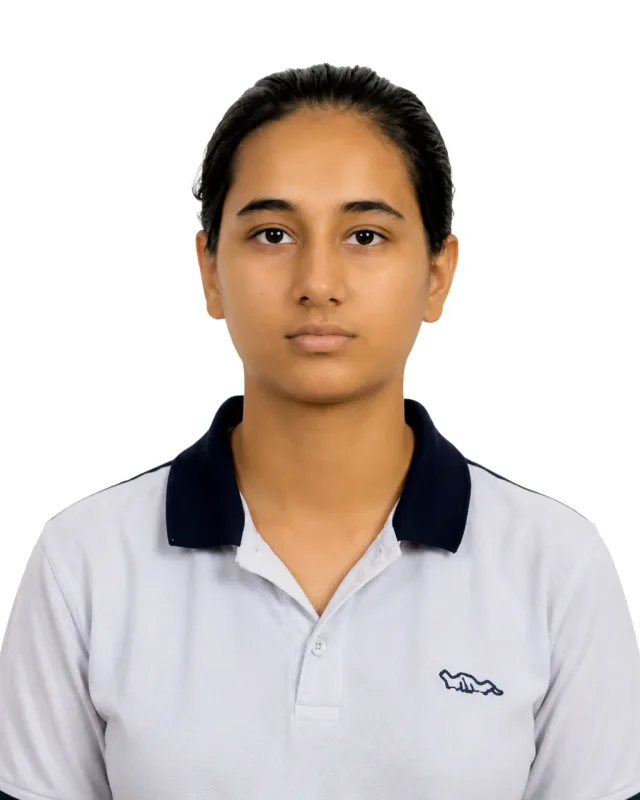
97/100
Manaswini
Science · ICSE
Mayo College Girls' School

95/100
Manasvi
Science · ICSE
Welham Girls' School
Considered answers for considered parents.
Begin with a considered academic conversation.
The first step is not enrolment. It is a structured conversation to understand the student's current position, identify conceptual gaps and outline the right academic pathway forward.
- Understanding the student's current academic position
- Identifying conceptual gaps and areas of strength
- Recommending format — One-to-One or Small Group
- Outlining an academic pathway for the year ahead
Continue reading across the curriculum.
- CBSE
Science (Grades 9–10)
Structured mastery of Grade 9 and 10 Science built on precision, conceptual depth and disciplined preparation.
Explore Programme → - Cambridge
Lower Secondary Science (Grade 8)
Three-year Cambridge Science pathway beginning in Grade 8, covering Biology, Chemistry and Physics as one connected foundation.
Explore Programme → - Cambridge
IGCSE Science & Chemistry (Grades 9–10)
Comprehensive IGCSE preparation focused on concept mastery, application and examination performance across Science and Chemistry.
Explore Programme → - IB
MYP Sciences
Inquiry-led IB MYP Sciences mentorship across Biology, Chemistry, Physics and Integrated Sciences.
Explore Programme →
Every student's starting point is different. The first step is understanding current strengths, identifying conceptual gaps and creating an academic pathway that supports long-term scientific growth.