Every curriculum demands a different way of thinking. Every student deserves preparation built for it.
Visionaries offers specialised Science programmes across CBSE, ICSE, IGCSE and IB MYP. Each programme is designed around the academic expectations, assessment language, curriculum depth and learning demands of the board it serves.
A CBSE student preparing for a national board examination should not be taught like an IGCSE student responding to application-led questions. An IB MYP learner working through criterion-based assessments should not receive the same academic structure as an ICSE student developing detailed written responses across Physics, Chemistry and Biology.
Visionaries keeps the standard of teaching consistently high while adapting the method, pace, practice system and assessment preparation to the curriculum.
CBSE Class 9 and 10 Science
Fixed-time online group classes and structured batches.
ICSE Class 9 and 10 Science
One-to-one classes or small groups of 3 to 4 students.
IB MYP 4 and MYP 5 Science
One-to-one classes or small groups of 3 to 4 students.
Cambridge Lower Secondary Science (Grade 8)
One-to-one classes or small groups of 3 to 4 students.
Cambridge IGCSE Science & Chemistry (Grades 9–10)
One-to-one classes or small groups of 3 to 4 students.
Choose the programme built for your child's curriculum.
CBSE Class 9 and 10 Science
Structured Science preparation across Physics, Chemistry and Biology for students who need stronger concepts, regular written practice, chapter-wise testing, disciplined revision and board-focused preparation.
Academic Focus
NCERT understanding, competency-based questions, numericals, diagrams, scientific terminology, answer writing, chapter tests, revision cycles and board examination readiness.
Delivery Model
Fixed-time online group classes and structured batches.
Best Suited For
Students who need consistency, academic discipline and a complete preparation system for Class 9 or Class 10 Science.
ICSE Class 9 and 10 Science
Personalised Science preparation for students who need deeper subject understanding, detailed written explanations, scientific precision and stronger command across Physics, Chemistry and Biology.
Academic Focus
Concept depth, terminology, diagrams, definitions, reasoning, structured responses, numerical application, regular correction and examination preparation.
Delivery Model
One-to-one classes or small groups of 3 to 4 students.
Best Suited For
Students who need individual academic attention, greater written precision and a teaching pace aligned with their current understanding.
IB MYP 4 and MYP 5 Science
Personalised support across Biology, Chemistry, Physics and Integrated Sciences for learners who need stronger conceptual understanding, application, scientific communication and criterion-aligned preparation.
Academic Focus
Conceptual learning, inquiry, scientific reasoning, investigation, interpretation, reflection, application and clear communication of scientific understanding.
Delivery Model
One-to-one classes or small groups of 3 to 4 students.
Best Suited For
Students who need personal diagnosis, clearer fundamentals and structured support for the academic demands of MYP 4 and MYP 5.
Cambridge Lower Secondary Science (Grade 8)
A complete Grade 8 Science programme covering Biology, Chemistry and Physics as one connected foundation — the beginning of a three-year academic pathway into Cambridge IGCSE.
Academic Focus
Foundational scientific reasoning, terminology, investigation and structured written communication before the IGCSE pathway begins.
Delivery Model
One-to-one classes or small groups of 3 to 4 students.
Best Suited For
Students entering Cambridge in Grade 8 who need a rigorous conceptual foundation before the IGCSE pathway begins.
Cambridge IGCSE Science & Chemistry (Grades 9–10)
Comprehensive IGCSE preparation for Grades 9 and 10 focused on conceptual depth, application-led practice, practical understanding, precise terminology and stronger responses to Cambridge-style questions.
Academic Focus
Scientific knowledge, application, problem-solving, command words, practical contexts, data interpretation, structured responses, past-paper preparation and answer precision.
Delivery Model
One-to-one classes or small groups of 3 to 4 students.
Best Suited For
Students who need more than generic tutoring and require preparation aligned with the depth, language and assessment expectations of the Cambridge IGCSE pathway.
One hundred marks show the outcome. The work behind them shows the programme.
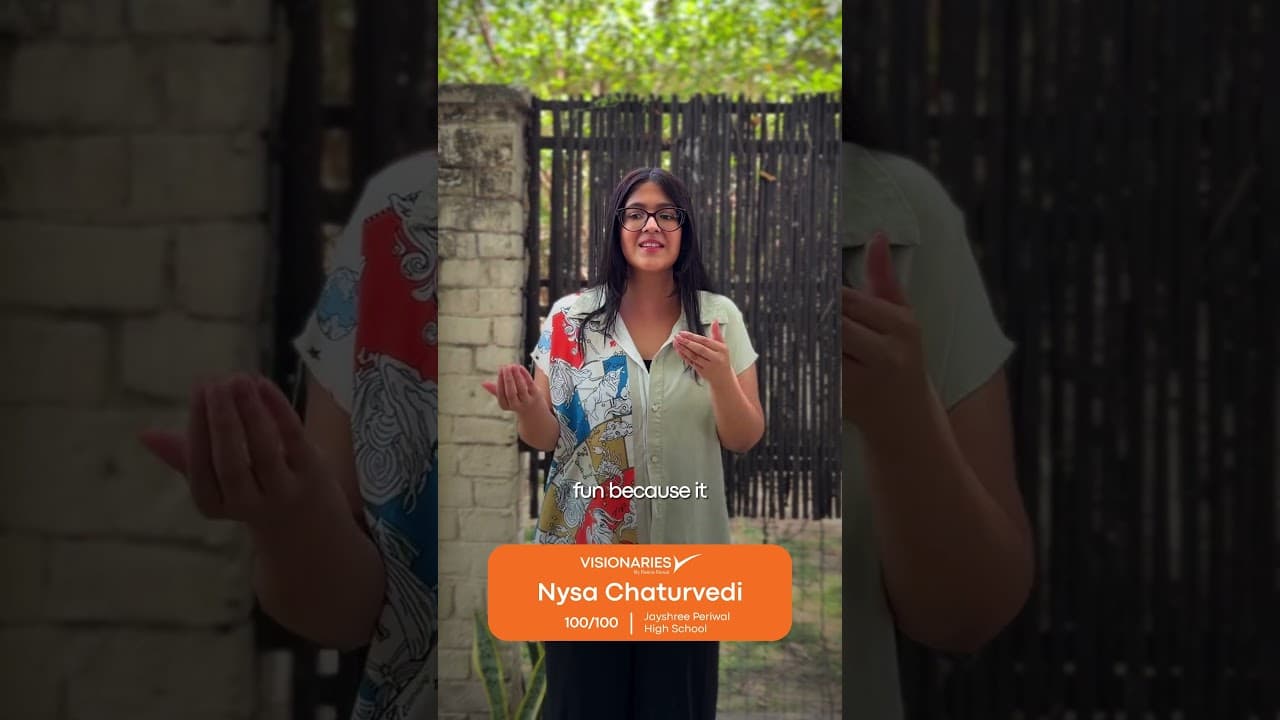
Nysa Chaturvedi — 100/100 in CBSE Class 10 Science
CBSE · JPHS
Nysa Chaturvedi
100/100 in Science · CBSE · JPHS
Nysa's result represents the work a complete curriculum programme must do before the final examination: build concepts, convert understanding into written performance, test regularly, correct gaps and create enough confidence for a student to perform under pressure.
The CBSE pathway at Visionaries is designed around that complete cycle. It does not begin and end with chapter explanation.
- Concept clarity across Physics, Chemistry and Biology
- Regular written practice
- Chapter-wise testing
- Revision discipline
- Board examination readiness
One teaching model cannot prepare students for four different curricula.
The subject may still be called Science, but the academic behaviour expected from the student changes across boards.
CBSE requires students to build command over prescribed content, competency-based questions, written presentation and board-examination performance.
ICSE expects detailed understanding, scientific terminology, structured explanations, diagrams, reasoning and subject depth.
IGCSE and Cambridge assessments require students to apply knowledge, interpret information, understand practical contexts and respond precisely to command words.
IB MYP Sciences ask learners to understand concepts, investigate scientific questions, process information, reflect on implications and communicate scientific thinking through criterion-based work.
Visionaries therefore does not force every student into the same class structure, practice system or answer-writing method.
CBSE students must learn to convert preparation into board performance.
Students require complete content coverage, disciplined written practice, regular testing, revision planning and the ability to answer competency-based and board-style questions accurately.
ICSE students must combine depth with written precision.
Detailed concepts alone are not enough. Students must learn to use scientific language, structure explanations, present diagrams correctly and apply their understanding across substantial written assessments.
IGCSE students must understand what the question is asking them to do.
Knowledge must be applied through the language of the assessment. Command words, practical contexts, interpretation and precise responses become central to performance.
IB MYP students must demonstrate how they think scientifically.
The student is expected to explain, investigate, analyse, evaluate and reflect. Preparation must therefore develop scientific thinking alongside subject knowledge.
Different curricula. One uncompromising academic standard.
The structure changes from programme to programme, but the academic principles do not.
Understanding before memorisation
Students must know why a concept works before they are expected to recall, explain or apply it.
Practice before performance
A concept becomes dependable only when the student has worked through enough questions, examples, diagrams, numericals and written responses.
Correction before repetition
Practising an incorrect method repeatedly does not create mastery. Errors must be identified, explained and corrected before they become habits.
Assessment before assumption
A teacher should not assume that a chapter has been understood because it has been explained. Testing reveals whether the student can recall, apply, write and perform independently.
Confidence through evidence
Students become confident when they repeatedly see themselves understand, solve, write and improve. Confidence is built through academic evidence, not motivation alone.
When Chemistry stops feeling intimidating, performance begins to change.
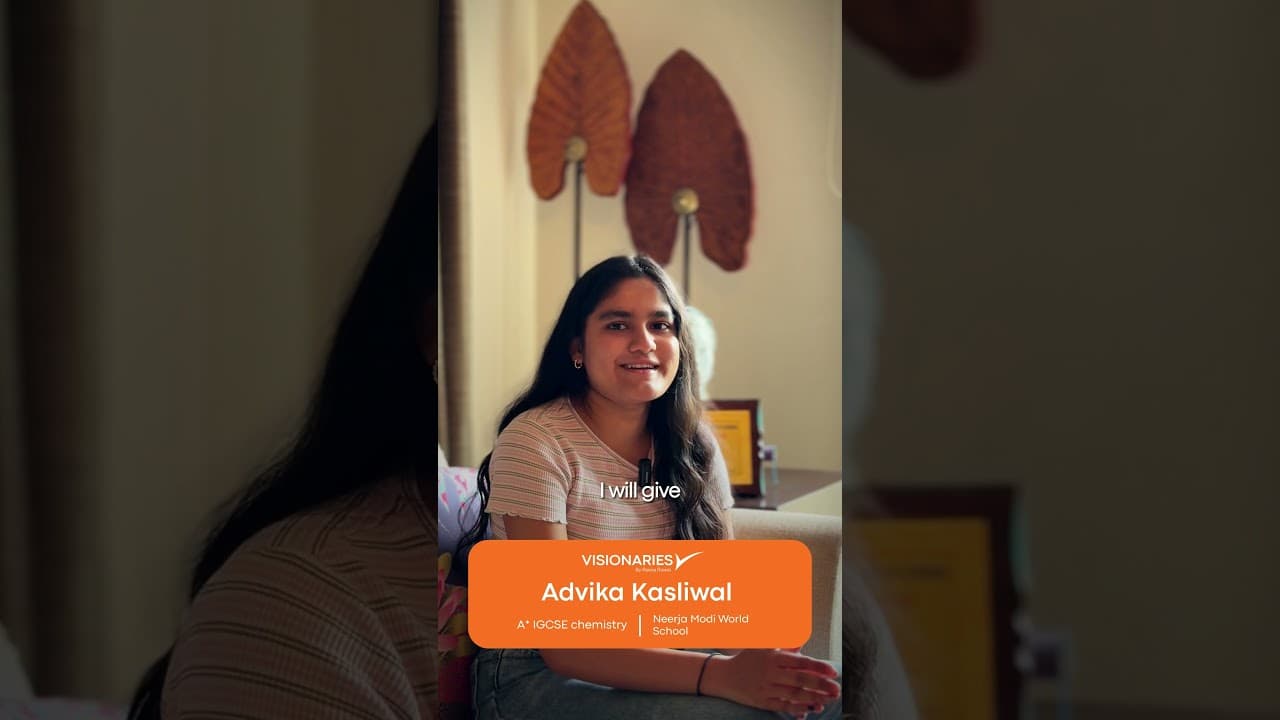
Advika Kasliwal — IGCSE School Topper
IGCSE · NMWS
Advika Kasliwal
A* in Science · School Topper · IGCSE · NMWS
Advika entered an international curriculum where Chemistry required more than remembering facts. Strong performance depended on conceptual clarity, application, terminology and the ability to respond with precision.
Her outcome demonstrates why international-curriculum students require teaching that understands both the subject and the assessment system around it.
- A* in Science
- IGCSE School Topper
- Concept-focused Chemistry preparation
- Application-led practice
- Student and parent video proof available
See how the four pathways differ.
| CBSE Class 9 and 10 | ICSE Class 9 and 10 | IB MYP 4 and MYP 5 | IGCSE / Cambridge Grades 8, 9 and 10 | |
|---|---|---|---|---|
| Primary Academic Emphasis | Concept clarity, prescribed curriculum mastery and board performance | Depth, detailed understanding and written precision | Inquiry, conceptual understanding and criterion-based scientific thinking | Knowledge, application, practical understanding and assessment precision |
| Subjects Supported | Physics, Chemistry and Biology | Physics, Chemistry and Biology | Biology, Chemistry, Physics and Integrated Sciences | Science and Chemistry, based on the student's programme requirements |
| Class Format | Fixed-time online group classes and structured batches. | One-to-one or small groups of 3 to 4 students | One-to-one or small groups of 3 to 4 students | One-to-one or small groups of 3 to 4 students |
| Assessment Preparation | Chapter tests, competency-based questions, written answers, revision and board papers | Detailed responses, definitions, diagrams, numericals, reasoning and examination practice | Criterion-aligned tasks, investigation, analysis, evaluation and scientific communication | Command words, application questions, practical contexts, data interpretation and past papers |
| Best Suited For | Students who need a disciplined and complete examination-focused Science system | Students who need personal attention, greater depth and stronger written command | Students who need conceptual and criterion-aligned academic support | Students who need curriculum-specific depth and precision beyond generic tutoring |
| Parent Consultation Outcome | A programme recommendation based on board, grade, current gaps, academic confidence and learning format. | A programme recommendation based on board, grade, current gaps, academic confidence and learning format. | A programme recommendation based on board, grade, current gaps, academic confidence and learning format. | A programme recommendation based on board, grade, current gaps, academic confidence and learning format. |
Every programme follows the Visionaries Academic Method.
Curriculum alignment changes what students practise and how they are assessed. The learning cycle itself remains rigorous across every programme.
Diagnosis
Understanding the student's current concepts, writing, confidence, assessment history, curriculum and learning gaps.
Concept Clarity
Teaching the scientific logic behind the topic and connecting it with diagrams, examples, terminology and prior knowledge.
Practice
Using curriculum-appropriate questions to move the student from passive understanding to independent performance.
Writing
Developing answers in the language, structure and level of precision expected by the relevant board.
Recall
Strengthening retention through questioning, writing, retrieval, revision and repeated use of the concept.
Testing
Checking whether the student can understand, recall, interpret, apply and write independently.
Correction
Identifying incomplete understanding, weak reasoning, imprecise language and recurring mistakes.
Confidence
Building academic confidence through repeated evidence of understanding and improvement.
Parent Visibility
Helping parents understand the student's progress, gaps and preparation without requiring them to micromanage learning.
The class format is chosen around the curriculum and the student.
Structured group preparation for CBSE
CBSE Class 9 and 10 Science is delivered through fixed-time online group classes and structured batches.
The model is designed for students who benefit from:
- a consistent weekly schedule
- complete Physics, Chemistry and Biology coverage
- chapter-wise progression
- regular worksheets and practice
- subject-specific testing
- revision cycles
- board-examination preparation
- academic accountability within a structured group environment
The group may learn together. The student's understanding must still be checked individually.
Explore CBSE SciencePersonal academic attention for ICSE, IB MYP and IGCSE
ICSE, IB MYP and IGCSE students are supported through one-to-one classes or small groups of 3 to 4 students.
The model is designed for students who require:
- personal academic diagnosis
- curriculum-specific explanation
- flexible pacing
- close answer correction
- individual doubt resolution
- deeper application-based discussion
- assessment-specific preparation
- greater teacher visibility
Small-group learning should preserve the depth of one-to-one academic attention.
Book a Parent ConsultationParents often see discipline, confidence and independence before they see the final result.
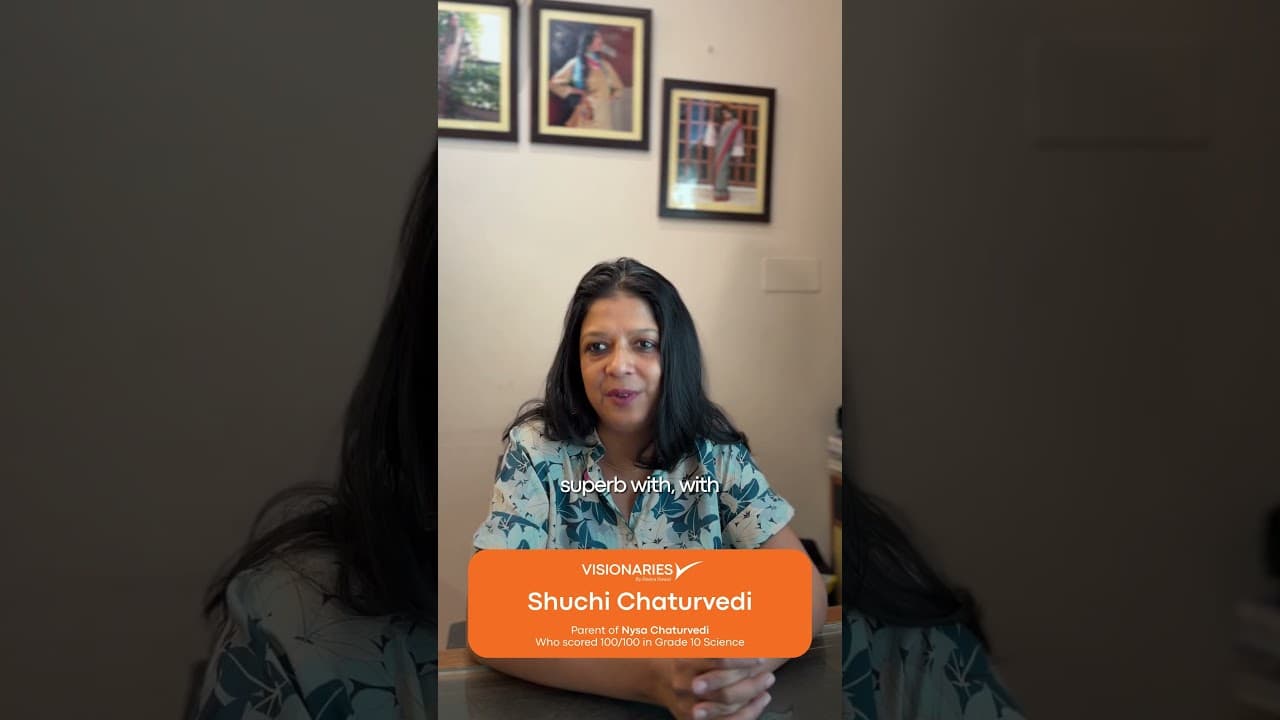
Parent Testimonial
CBSE
What changed before the perfect score arrived
For a parent, progress becomes visible in ordinary academic behaviour: the child begins studying without avoidance, asks clearer questions, revises with greater structure and enters examinations with more confidence.
Nysa's 100/100 result became the final evidence. The changes in curiosity, organisation and academic confidence had begun earlier.
“Visionaries gave direction to Nysa's curiosity. Science became something she genuinely enjoyed exploring and understanding.”
Shuchi Chaturvedi · Parent of Nysa Chaturvedi
Read Testimonials →Which description sounds closest to your child?
My child is in CBSE Class 9 or 10 and needs structured board preparation.
The student needs a fixed academic rhythm, complete Science coverage, regular practice, testing, revision and stronger written performance.
Recommendation
CBSE Class 9 and 10 Science
My child studies ICSE and needs deeper personal support.
The student needs greater conceptual depth, stronger scientific terminology, detailed written answers and close correction.
Recommendation
ICSE Class 9 and 10 Science
My child is in IB MYP and understands topics but struggles to demonstrate learning in assessments.
The student may need support with conceptual transfer, investigation, analysis, evaluation, scientific communication or criterion-aligned preparation.
Recommendation
IB MYP 4 and MYP 5 Science
My child studies Cambridge IGCSE and finds application questions or Chemistry difficult.
The student may need stronger concepts, clearer understanding of command words, more practical-context questions, past-paper practice and precise answer correction.
Recommendation
Cambridge IGCSE Science & Chemistry (Grades 9–10)
My child is entering Cambridge in Grade 8 and needs a strong foundation before IGCSE.
The student needs a rigorous Grade 8 Science pathway covering Biology, Chemistry and Physics before the two-year IGCSE preparation begins.
Recommendation
Cambridge Lower Secondary Science (Grade 8)
The right programme begins with understanding the student.
A curriculum name alone is not enough to recommend a class.
The consultation considers:
- the student's board and grade
- the subjects requiring support
- current academic performance
- conceptual gaps
- written-answer concerns
- examination or assessment timeline
- confidence and study behaviour
- suitability for a structured group, small group or one-to-one format
A programme is recommended only after the academic need and delivery fit are understood.
Book a Parent Consultation“A programme recommendation based on board, grade, current gaps, academic confidence and learning format.”
+91 96025 08922
visionariesbyreenrawal@gmail.comChoose the curriculum. Begin with the right academic method.
Science becomes easier when the student receives teaching that understands both the subject and the curriculum in which it will be assessed.
+91 96025 08922 · visionariesbyreenrawal@gmail.com