CBSE Class 9 and 10 Science, taught for understanding and built for performance.
Visionaries offers structured Science preparation across Physics, Chemistry and Biology for students who need more than chapter explanation.
The programme develops the complete academic chain behind strong performance: concepts that make sense, questions that test understanding, answers written with precision, mistakes corrected early, revision completed systematically, and confidence built before examination pressure begins.
26+ years of teaching. 6,000+ students. A sustained record of 95+, 99 and 100/100 outcomes.

100/100
Nysa Chaturvedi
CBSE · JPHS

100/100
Vaibhav
CBSE · JPHS

99/100
Kushagra Kinra
CBSE · St. Anselm's, Malviya Nagar

99/100
Navya Sharda
CBSE · NMS

98/100
Bhavya Gupta
CBSE · St. Xavier's School

98/100
Rakshit Jain
CBSE · JPHS

98/100
Anamya Khandelwal
CBSE · NMS

98/100
Mitisha Agarwal
CBSE · JPHS

98/100
Harshit Jain
CBSE · JPHS

98/100
Angel Saran
CBSE · JPHS

98/100
Vivan Bumb
CBSE · JPHS
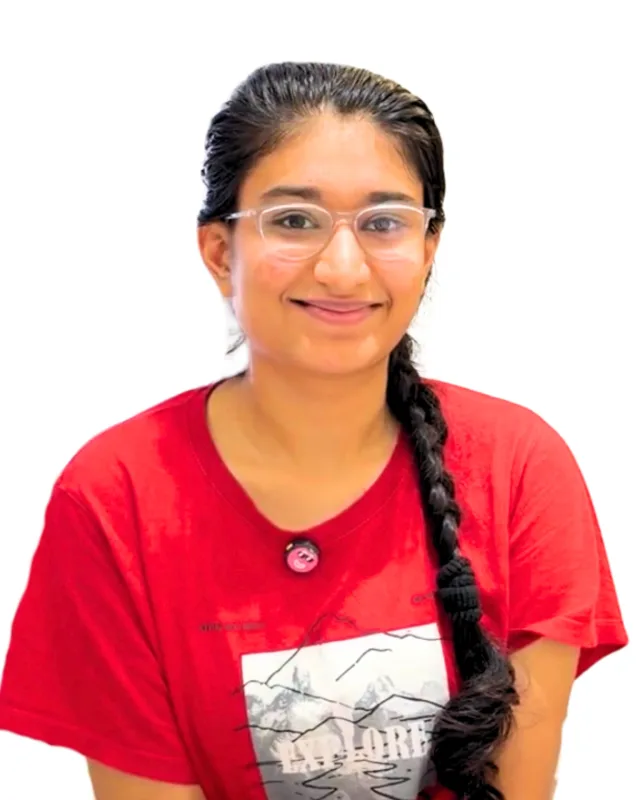
97/100
Nishka Moolwani
CBSE · NMS

97/100
Tanisha
CBSE · MGD

97/100
Aadhya Kathodia
CBSE · SMS

97/100
Aavyam Chawdhary
CBSE · SMS

96/100
Naisha Gupta
CBSE · JPHS
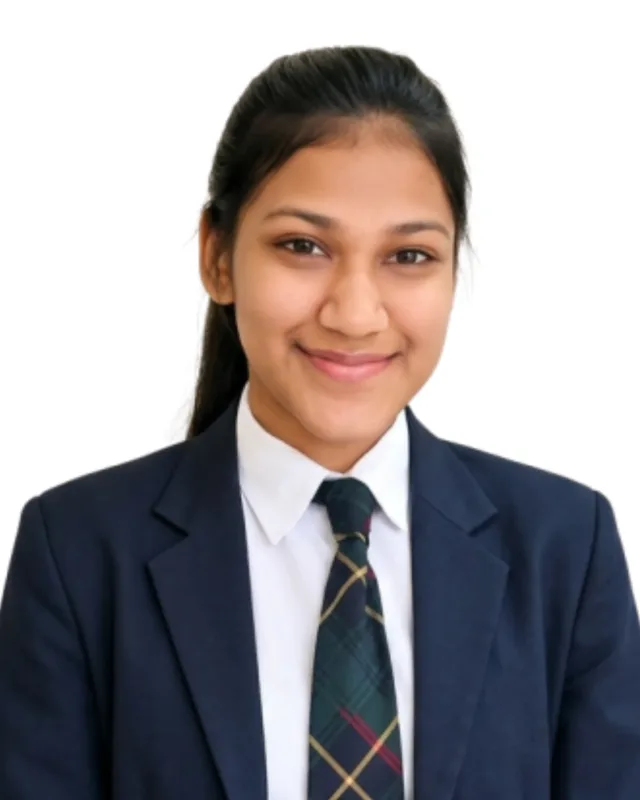
96/100
Akshita Sharda
CBSE · NMS

96/100
Kanav Sonkhiya
CBSE · NMS
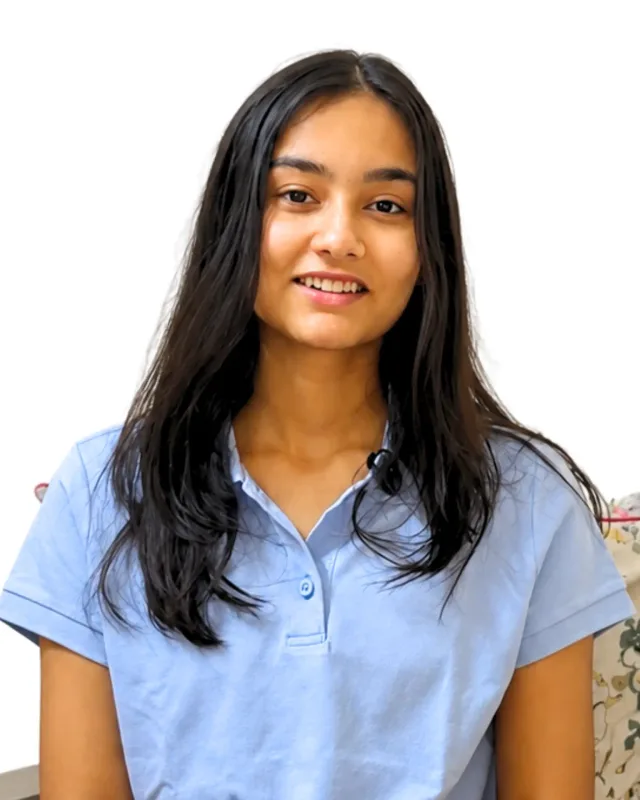
96/100
Manasvi Malpani
CBSE · JPHS

96/100
Avni Nangia
CBSE · JPHS

96/100
Ishita Dalmia
CBSE ·

95/100
Suhani Patni
CBSE · JPHS

95/100
Shrinidhi Khandal
CBSE · RBHS
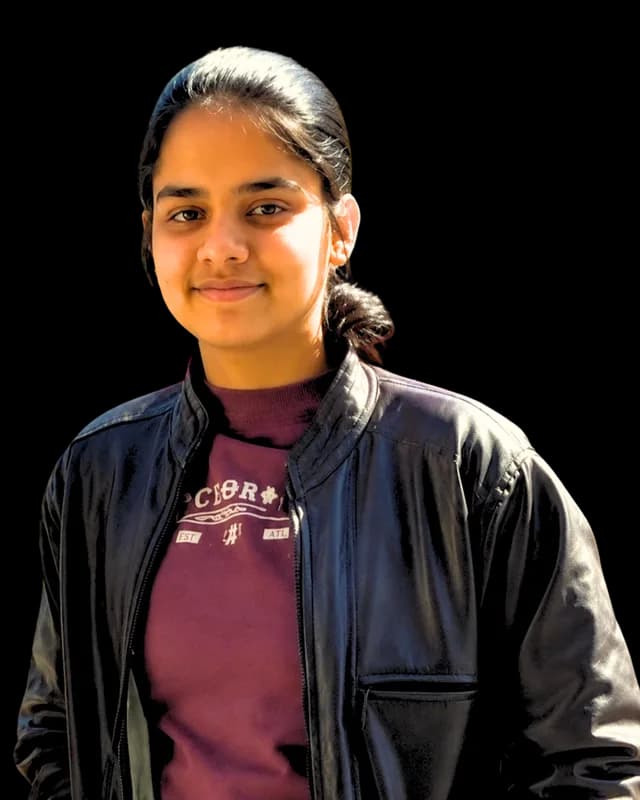
95/100
Kriti Goenka
CBSE · USA Vidya Niketan

95/100
Garvita
CBSE · Manav Rachna International School, Gurugram

93/100
Samriddhi Dubey
CBSE · NMS
Grades
CBSE Class 9 and Class 10
Subjects
Physics, Chemistry and Biology
Format
Structured group classes
Delivery
Live online and offline in Jaipur
Investment
₹28,000 for Class 9 ₹35,000 for Class 10
A child can understand the chapter and still lose marks.
A student can know more than the answer sheet shows.
Visionaries works on the distance between the two.
This is where many parents become confused.
The child has attended the class. The chapter has been read. The textbook questions have been attempted. The student may even be able to explain the idea verbally.
And yet, the test result remains below expectation.
That happens because CBSE Science performance does not depend on understanding alone.
The student must be able to:
- 01retrieve the concept without prompts
- 02recognise what an unfamiliar question is testing
- 03apply the concept in a new context
- 04use the correct scientific terminology
- 05structure the answer according to the marks
- 06draw and label diagrams accurately
- 07complete numericals without losing steps or units
- 08distinguish between similar processes and definitions
- 09revise enough for learning to remain available under pressure
Most lost marks come from patterns that can be corrected.
The concept was understood, but not retained.
Rereading creates familiarity. It does not always create recall. Students often feel that they know a chapter because the textbook looks familiar. The difficulty appears only when the book is closed and the student has to retrieve the idea independently.
The answer is broadly correct, but scientifically incomplete.
A student may understand the idea and still omit the exact term, comparison, reason, unit, condition or labelled feature required by the question.
The child practises questions but does not analyse mistakes.
Completing more questions does not automatically produce improvement. Without correction, the same misunderstanding can appear in several forms across worksheets, tests and examinations.
Numericals are memorised as formats.
The moment the values, wording or application changes, the student becomes unsure about which principle or formula to use.
Biology becomes a memory exercise.
Students may remember paragraphs without understanding the sequence, relationship or function behind the process.
Revision begins after too much has been forgotten.
By the time the examination approaches, the student is not revising. The student is relearning.
Competency-based questions expose shallow preparation.
CBSE's competency-based approach places greater emphasis on demonstrating learning outcomes, applying knowledge in real contexts, solving authentic problems and showing evidence of mastery rather than relying only on recall.
The solution is not simply more study time.
It is a better learning system.
CBSE Science is no longer a memory examination.
The official CBSE approach describes Science as a process of observing, questioning, forming hypotheses, testing ideas, analysing evidence and revising understanding.
For Classes 9 and 10, the curriculum is intended to develop conceptual understanding alongside scientific inquiry, application, modelling, interpretation and communication.
That changes what serious preparation should look like.
- Stage 01
Know
Can the student recall the relevant concept, term, law, process or relationship?
- Stage 02
Understand
Can the student explain why it happens, distinguish it from a similar idea and connect it with prior learning?
- Stage 03
Apply
Can the student use that understanding in a diagram, numerical, practical situation, experiment, graph, case or unfamiliar question?
- Stage 04
Communicate
Can the student present the response clearly, scientifically and in the form expected by the assessment?
This is why completing the textbook once is not enough.
The programme must train the student to think, retrieve, apply and write.
Class 9 builds the system. Class 10
demands that the system performs.
The year in which academic habits become visible.
Class 9 is often the first stage at which Science begins to feel substantially more layered.
The vocabulary becomes more precise. Physics becomes more mathematical. Chemistry becomes more abstract. Biology requires greater depth and differentiation. Answers must become more structured.
The Visionaries priority in Class 9
- close prerequisite gaps before they become Class 10 weaknesses
- build scientific language
- make numericals less intimidating
- strengthen diagrams and classification
- move from reading to retrieval
- create regularity in practice
- teach students how to study different parts of Science differently
- make the transition to Class 10 academically smoother
₹28,000 for the complete Class 9 programme
The year in which understanding must become marks.
Class 10 preparation carries a different pressure.
The syllabus must be completed in time. Weak chapters must be identified early. Written answers must become precise. Revision must happen more than once. Students must practise under examination conditions.
The Visionaries priority in Class 10
- complete and timely syllabus coverage
- accurate conceptual understanding
- competency-based question preparation
- chapter-wise written practice
- stronger numericals
- board-style answer presentation
- cumulative revision
- timed testing
- error analysis
- examination strategy
₹35,000 for the complete Class 10 programme
Complete Science preparation across Physics, Chemistry and Biology.
The programme follows the applicable CBSE curriculum for the student's academic session and aligns teaching, practice and assessment with the relevant school progression.
Curriculum details may change across academic sessions. The programme therefore follows the official CBSE curriculum applicable to the enrolled student rather than relying on a permanently fixed public chapter list.
Chemical Substances: Nature and Behaviour
Students work through areas such as
- chemical reactions and equations
- balancing equations
- types of reactions
- oxidation and reduction
- acids, bases and salts
- indicators and pH
- metals and non-metals
- reactivity
- ionic compounds
- corrosion
- carbon and its compounds
- hydrocarbons
- homologous series
- functional groups
- soaps and detergents
Students must learn to interpret chemical behaviour, not merely reproduce reactions. The programme works on observation, representation, equation writing, balancing, reaction classification, prediction, comparison and application in everyday contexts.
How students actually become good at Science.
Strong Science performance is built in layers. A missing layer eventually appears as a lost mark.
- 01Layer 1
Understanding
Can the student explain the concept without repeating a memorised paragraph?
Understanding means the child can answer:
— What is happening? — Why is it happening? — What would change if one condition changed? — How is this idea different from a similar one? — Where does this appear in the real world?
- 02Layer 2
Representation
Can the student express the concept in the form Science requires?
That may involve:
— a labelled diagram — a chemical equation — a graph — a numerical relationship — a flow sequence — a comparison table — a scientific definition
Representation makes abstract knowledge usable.
- 03Layer 3
Application
Can the student recognise the same concept when the question looks unfamiliar?
The context may change. The data may change. The wording may change.
The principle remains.
- 04Layer 4
Expression
Can the student write the answer in language that earns marks?
The answer must contain:
— the correct scientific idea — the required keyword — the relevant explanation — the right number of points — accurate sequencing — correct units or labels
- 05Layer 5
Retention
Can the student still retrieve the concept after the chapter is no longer recent?
Retention requires:
— spaced revision — active recall — mixed practice — cumulative testing — repeated application
- 06Layer 6
Examination Performance
Can the student do all of this independently, accurately and within time?
That is the final layer.
It is also the layer that cannot be built in the final week.
Every chapter moves through a complete academic cycle.
Diagnose
1Before new teaching can become dependable, the teacher must know what the student already understands and what is missing.
Concepts are broken into logical steps and connected with examples, diagrams, comparisons and prior knowledge.
2Explain
Question
3Students are asked to explain, predict, compare, calculate and justify during learning.
The method is modelled through worked numericals, written answers, diagrams, equations, reasoning questions and competency-based applications.
4Demonstrate
Practise
5Students move from guided work to independent work.
Students learn to convert understanding into examination-ready responses.
6Write
Test
7A chapter is not considered secure because it was taught. It is tested.
Errors are identified by type: conceptual error, recall error, interpretation error, calculation error, language error, presentation error, avoidable error.
8Correct
Retrieve
9Previously completed learning returns through revision questions, mixed practice and cumulative tests.
As examinations approach, preparation moves towards timed work, paper strategy, question selection, answer sequencing, revision prioritisation and mistake control.
10Prepare for Performance
Knowing the answer is not the same as writing one that earns full marks.
CBSE Science answers require precision. Visionaries teaches students to recognise the demand of the question before writing.
Define
Use the scientifically accepted meaning without unnecessary expansion.
State
Give the required fact, principle, law or point directly.
Explain
Show the relationship between cause, process and outcome.
Differentiate
Use the same basis of comparison across both sides.
Give reason
Name the scientific principle and connect it with the observation.
Calculate
Show the relationship, substitution, steps, unit and final answer clearly.
Draw
Use the appropriate structure, labels, direction, proportion and title.
Describe a process
Present the sequence in a logical and complete order.
The Visionaries answer-writing checklist
- 01Have I answered every part?
- 02Have I used the required scientific term?
- 03Does the response match the marks?
- 04Is the sequence logical?
- 05Is the diagram properly labelled?
- 06Have I shown the numerical steps?
- 07Is the unit correct?
- 08Is there vague or repetitive language?
- 09Could an examiner identify the required point immediately?
Physics improves when students stop treating formulas as guesses.
- Step 1
Identify the principle
What is the question actually testing?
- Step 2
Extract the information
What is given? What is required? Are conversions needed?
- Step 3
Select the relationship
Which equation connects the known and unknown quantities?
- Step 4
Substitute carefully
Values are entered with attention to units and signs.
- Step 5
Solve step by step
The working remains visible and logically ordered.
- Step 6
Interpret the answer
Does the value make scientific sense?
This reduces dependence on memorised formats and makes students more reliable when the wording changes.
Testing should reveal what to fix, not merely what the child scored.
A mark without diagnosis has limited value.
The Visionaries testing approach is designed to answer:
- Which concepts are secure?
- Which concepts were remembered but not applied?
- Which answers lacked terminology?
- Which numericals failed because of method?
- Which errors are recurring?
- Which chapters are beginning to fade?
- What must be revised next?
- 01
Chapter Practice
Immediate practice after teaching helps convert explanation into independent use.
- 02
Chapter Testing
Students demonstrate whether they can recall, apply and write without active support.
- 03
Error Correction
Mistakes are explained and revisited rather than simply marked.
- 04
Cumulative Revision
Earlier chapters return as the programme progresses.
- 05
Examination-Oriented Preparation
For Class 10, preparation increasingly includes timed practice, sample-paper work and board-style question handling.
Strong results are not the beginning of the
story. They are the evidence at the end.
100/100
Nysa Chaturvedi
CBSE · JPHS
100/100
Vaibhav
CBSE · JPHS
99/100
Kushagra Kinra
CBSE · St. Anselm's, Malviya Nagar
99/100
Navya Sharda
CBSE · NMS
98/100
Bhavya Gupta
CBSE · St. Xavier's School
98/100
Rakshit Jain
CBSE · JPHS
98/100
Anamya Khandelwal
CBSE · NMS
98/100
Mitisha Agarwal
CBSE · JPHS
98/100
Harshit Jain
CBSE · JPHS
98/100
Angel Saran
CBSE · JPHS
98/100
Vivan Bumb
CBSE · JPHS
97/100
Nishka Moolwani
CBSE · NMS
97/100
Tanisha
CBSE · MGD
97/100
Aadhya Kathodia
CBSE · SMS
97/100
Aavyam Chawdhary
CBSE · SMS
96/100
Naisha Gupta
CBSE · JPHS
96/100
Akshita Sharda
CBSE · NMS
96/100
Kanav Sonkhiya
CBSE · NMS
96/100
Manasvi Malpani
CBSE · JPHS
96/100
Avni Nangia
CBSE · JPHS
96/100
Ishita Dalmia
CBSE ·
95/100
Suhani Patni
CBSE · JPHS
95/100
Shrinidhi Khandal
CBSE · RBHS
95/100
Kriti Goenka
CBSE · USA Vidya Niketan
95/100
Garvita
CBSE · Manav Rachna International School, Gurugram
93/100
Samriddhi Dubey
CBSE · NMS
Not one exceptional result. A repeated standard of preparation.
View More CBSE Results →Nysa Chaturvedi · CBSE · JPHS · 100/100 in Science
Nysa scored 100/100. The more important change had begun before the examination.
A perfect score is visible.
The learning behind it is less visible.
It appears when a student begins asking better questions.
When Science stops feeling like information that must be carried and starts becoming a subject that can be understood.
When revision becomes organised.
When written answers become more deliberate.
When the student enters the examination knowing that the preparation has already been tested.
Nysa's result represents the complete cycle Visionaries seeks to build:
- curiosity directed into understanding
- concepts converted into precise answers
- regular work converted into retention
- correction converted into control
- preparation converted into confidence
Parents often notice the change before the report card confirms it.
The first signs may be quieter than a high score.
The child begins sitting down to study with less resistance.
Questions become more specific.
The student can explain what is weak instead of saying, “I don’t understand anything.”
Test mistakes stop feeling mysterious.
Revision becomes less chaotic.
Confidence becomes calmer because it is based on preparation.
- improved confidence
- clearer concepts
- more structured revision
- less fear of Science
- greater independence
- visible examination readiness
Verified CBSE parent quotes appear once approved recordings are connected.
A complete academic programme, not an
occasional doubt-solving class.
Class 9
CBSE Class 9 Science
- Programme investment
- ₹28,000
- Subjects
- Physics, Chemistry and Biology
- Format
- Structured group classes
- Delivery
- Live online classes, with offline classroom batches available in Jaipur
- Academic emphasis
- Foundation, conceptual depth, scientific expression, numericals, written practice, testing and readiness for Class 10
Class 10
CBSE Class 10 Science
- Programme investment
- ₹35,000
- Subjects
- Physics, Chemistry and Biology
- Format
- Structured group classes
- Delivery
- Live online classes, with offline classroom batches available in Jaipur
- Academic emphasis
- Syllabus completion, competency-based questions, board-answer writing, numericals, revision, testing and examination preparation
Online Classes
Designed for students across locations who need:
- live teaching
- fixed structured timings
- regular academic progression
- curriculum-aligned preparation
- group accountability
- access without geographical limitation
Online learning is not presented as a secondary substitute. It is a deliberately structured live academic format.
Offline Classes
Offline classroom batches are available in Jaipur for students who prefer in-person learning.
Jaipur is a delivery option, not the limit of the programme.
This programme is built for students who need a system, not just more information.
The programme may be particularly suitable when:
- the student understands in class but underperforms in tests
- Physics numericals create anxiety
- Chemistry feels abstract
- revision is inconsistent
- the student needs a fixed academic rhythm
- a high-scoring student wants greater precision and consistency
- the child is entering Class 9 without reliable study habits
- Biology is being memorised without understanding
- written answers lose marks despite broad understanding
- mistakes repeat across tests
- Class 10 preparation feels fragmented
- a currently weak student needs concepts rebuilt without being labelled weak
A child is not weak in Science. The child may simply not yet have been taught how to study it.
Structure works only when the student participates in it.
The programme may not be the right fit for:
- students seeking only occasional last-minute doubt solving
- families looking for a purely monthly tuition arrangement
- students unwilling to complete assigned practice
- families unable to commit to fixed class timings
- students seeking a one-to-one CBSE format when only group enrolment is being offered
- families expecting marks without regular participation, testing and revision
Frequently asked questions.
The following answers cover enrolment, curriculum, format and preparation. If a question is not addressed here, the parent consultation is the fastest way to get clarity.
Book a Parent ConsultationContinue reading across the curriculum.
- Cambridge
Lower Secondary Science (Grade 8)
Three-year Cambridge Science pathway beginning in Grade 8, covering Biology, Chemistry and Physics as one connected foundation.
Explore Programme → - Cambridge
IGCSE Science & Chemistry (Grades 9–10)
Comprehensive IGCSE preparation focused on concept mastery, application and examination performance across Science and Chemistry.
Explore Programme → - IB
MYP Sciences
Inquiry-led IB MYP Sciences mentorship across Biology, Chemistry, Physics and Integrated Sciences.
Explore Programme → - ICSE
Science
ICSE Science mentorship built on conceptual depth, scientific communication and precise answer writing.
Explore Programme →
Build the Science system before examination pressure takes over.
The strongest time to correct a weakness is not after the pre-board. It is when there is still enough time to understand, practise, test, correct and revise.
Visionaries offers structured CBSE Class 9 and Class 10 Science preparation through live online group classes for students across locations, with offline classroom batches available in Jaipur.
Class 9
₹28,000
Class 10
₹35,000
Science becomes easier when understanding is taught, practice is structured and performance is prepared.